




10 Nov Southern African Migratory Birds
The Long Journey South
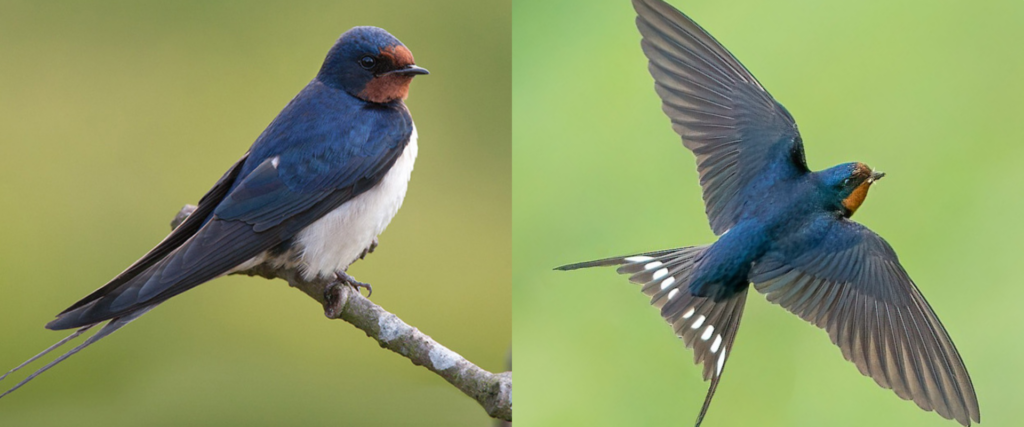
Imagine a tiny bird which could fit into the palm of your hand and weighs less than two tablespoons of sugar, flying 10 000 km. Now imagine that same bird repeating the trip six or seven months later, and the remarkable phenomenon of bird migration becomes even more impressive.
There are about 100 species of migratory birds in South Africa and Zimbabwe, and visitors from Europe could quite possibly see a Barn swallow deep in the bush while on safari and encounter the same individual at home a few months later.
Barn swallows, which weigh about 20 grams, migrate from Britain and parts of western Europe, braving storms, predators and food shortages caused by human actions.
They navigate using the sun, stars and magnetic fields and manage to arrive at the start of summer in Southern Africa, close to the area from where they departed.
Although Barn swallows are tiny, they are not the smallest migrant. The Willow warbler, which only weighs 12 grams, travels between southern Africa and breeding grounds which are spread from Ireland in the west, to Finland in the north and Ukraine and Russia in the east.
In 2010, scientists estimated that at least 2.1 billion birds migrate northwards from Africa to Europe and Western Asia annually, most crossing the Mediterranean Sea or over Israel. Some also fly along the west coast of Africa.
Remarkable Journeys
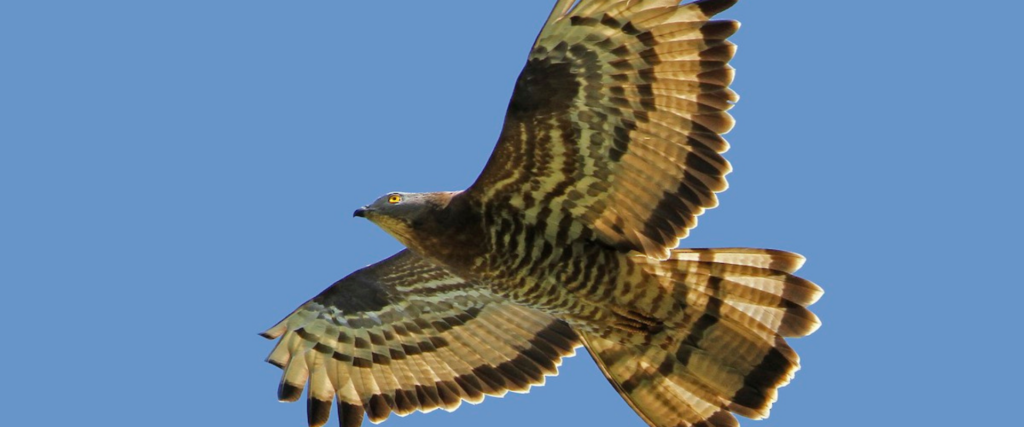
A European honey buzzard tracked by researchers from the Novia University of Applied Sciences in Finland surprised everyone when it was revealed that she flew almost 10 000 km in 42 days on her journey from South Africa to Finland in 2021.
She averaged about 230 km a day following a route that took her directly north across Africa until she crossed into Eurasia via Israel, flew along the western shores of the Black Sea and then directly north again to Finland.
In 2024, researchers from BirdLife South Africa made a similarly exciting discovery when a European Roller, which they named Hera, was fitted with lightweight satellite tracking devices which revealed she travelled nearly 10 000 km from the Greater Kruger National Park to Uzbekistan.
She stopped to rest and feed in several places along the way, including in India and Somalia.
Some Journeys are Riskier than Others
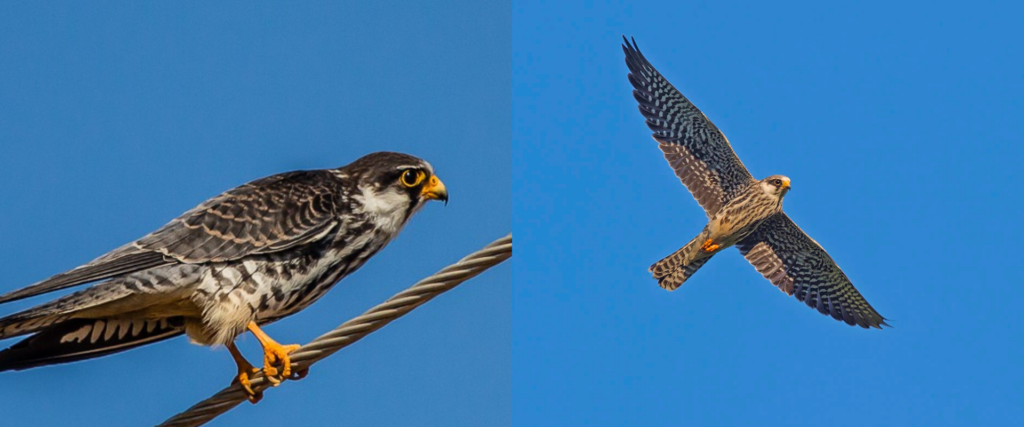
One of the riskiest migrations is undertaken by the Amur falcon, which flies 2 800 km non-stop across the Arabian Sea on its route from breeding grounds in eastern Siberia to South Africa. The birds fly across India and then over the ocean to reach Somalia before heading south.
They are common in Zimbabwe and South Africa, where they feed on insects and occasionally small mammals. The birds time their ocean crossing to ensure they are assisted by the prevailing winds.
They usually arrive in South Africa in November and leave in March or early May.
Migration Closer to Home
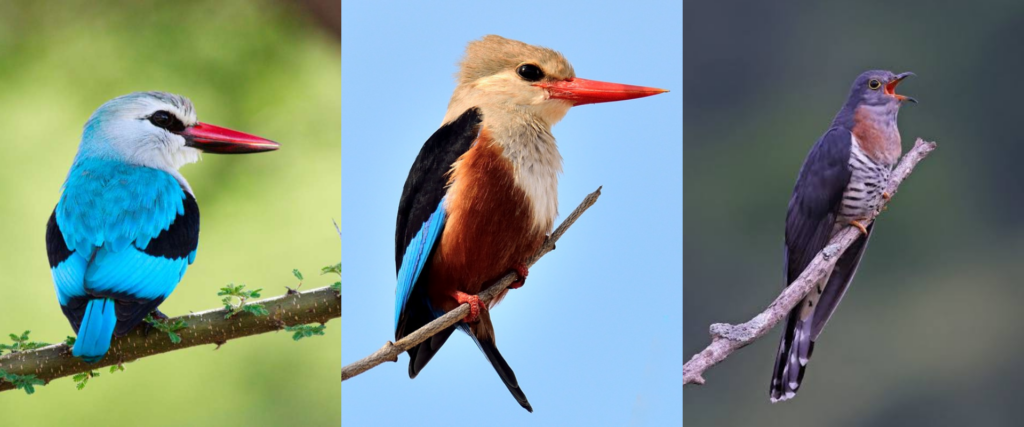
Some birds are Intra-African migrants and move within the continent. Both the Woodland and Grey-headed kingfisher move north towards central Africa during the southern African winter.
Another Intra-African migrant is the Red-chested cuckoo, which has a distinctive “Piet my Vrou” call that is well known to many. What is less well known is where they go in winter.
These birds move to central Africa, but their exact movements are not clear, yet another small mystery in the amazingly complex world of bird migration.
References:
-
BirdLife South Africa (www.birdlife.org.za)
-
The Natural Link Between Europe and Africa – 2.1 Billion Birds on Migration (https://www.researchgate.net/publication/227680497_The_natural_link_between_Europe_and_Africa_-_21_billion_birds_on_migration)